What Happens During an Epoxy Floor Installation
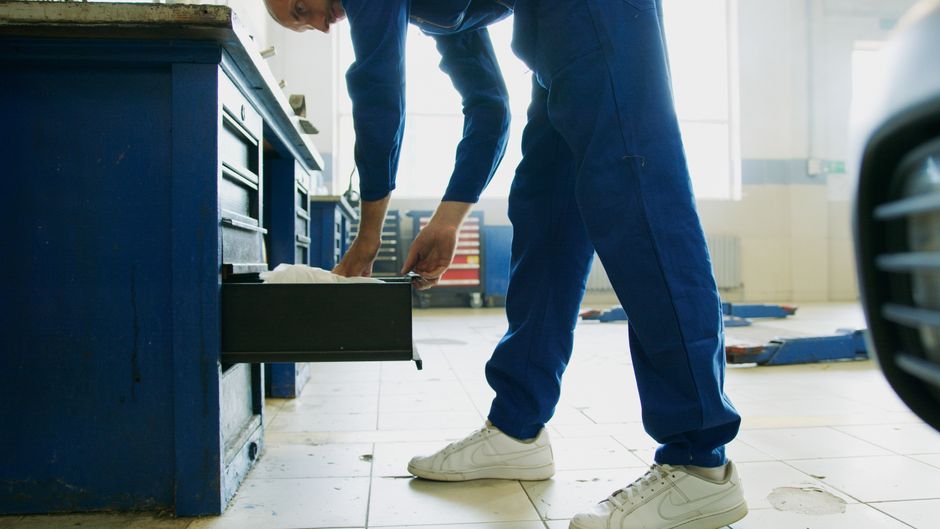
The base coat does one job: it bonds to the prepared slab and builds the film that carries every layer above it. The order of work on an epoxy floor in Riverside, CA follows the sequence laid out in the notes at epoxy flooring riverside raahi, from the first inspection of the concrete to the last day of cure before anything heavy rolls across it.
Clearing, Inspection and Moisture Testing

The floor is cleared, inspected, and moisture tested before any work begins. Cracks, oil stains, old sealer and patched areas get marked on the slab. Ground in Riverside County is dry for most of the year, but a slab can still pass moisture vapor upward, and a coating laid over it will blister. Santa ana winds dry the surface of a garage slab quickly while the concrete below stays damp, so the test reads the slab itself and not the air around it.
Diamond Grinding and Repair
The slab is diamond ground to remove laitance and old sealer and to open the pores of the concrete. Grinding leaves a profile like coarse sandpaper, and the primer grips that profile. Cracks and spalls are then filled with repair material and ground flush. The whole floor is vacuumed thoroughly, edges and corners included, because dust left behind becomes a weak layer under the coating.
Mixing Resin and Hardener
Resin and hardener are combined at the exact ratio on the data sheet. The ratio is measured, never judged by eye, since an off ratio mix may stay soft or tacky and never cure properly. The mix runs for the stated time, the sides and bottom of the pail get scraped, and the batch is poured out promptly. Heat builds in a full pail, and in the Inland Empire summer that shortens working time noticeably.
Base Coat and Flake Broadcast
A primer or base coat is rolled or squeegeed onto the slab, then back rolled for even coverage with no puddles or dry streaks. If a decorative finish is chosen, vinyl flake or quartz sand is broadcast into the wet base coat by hand, thrown upward so it falls evenly, until the surface is fully covered. Once the base has cured, the excess flake is scraped and swept off, and the loose material is vacuumed up.
Topcoat and Return to Service
Topcoats must go on within the recoat window on the data sheet, or the prior coat must be scuff sanded to give the next layer a surface to bond to. A clear coat of polyaspartic or urethane over the flake locks it in and takes the wear. One coat does not give the same result as a full system, because the build comes from the layers working together. Light foot traffic usually follows in about a day, and vehicles wait several days as the data sheet directs.