Epoxy Flooring in Riverside, CA

A plain guide to epoxy flooring in Riverside, CA. Learn how garage and shop floors are prepared, coated, and cured, and how Inland Empire heat, dust, and sun affect the job.

What We Cover

Epoxy Flooring in Riverside, CA

An epoxy floor coating is a two component system of resin and hardener that cures by chemical reaction, not by drying. Mixed on site, the two parts bond to the concrete and harden into a tough, continuous surface. Done right, it resists oil, tire marks, and daily wear. Riverside County homeowners use it in garages, workshops, and patios, from the older streets near Victoria Avenue to newer tracts toward La Sierra University.

What Makes an Epoxy Floor Last

Surface preparation and slab moisture decide most outcomes. Grinding opens the concrete so the resin can grip, and cracks, oil, and old sealer have to be dealt with before any coating goes down. Skipping steps here is where most failed floors begin.

Moisture vapor rising through the slab can push a coating off the concrete, so a slab that looks dry may still need testing. A thick, well-bonded coat on sound concrete outlasts a thin coat on a rushed surface every time.

Riverside Heat, Wind, and Sun

Heat changes how epoxy behaves on the slab. Hot summers across the Inland Empire shorten working time, so the mix has to be laid fast or it starts to set in the bucket. Dry, dusty Santa Ana winds blow grit into wet coating, which leaves specks in the finish. Strong sun through an open garage door can also yellow some coatings over time, a point worth knowing whether the house sits below Mount Rubidoux or out near the Santa Ana River.

Crews that work a garage near Riverside Municipal Auditorium face the same clock as one in a farther suburb: start early, watch the slab temperature, and keep doors shut against wind.

Guides

The guides on this site cover concrete preparation, the best time to install in heat and wind, slab moisture, coatings that hold up to sun, what happens on installation day, and how to choose an installer in Riverside County. Each one answers a single question in plain terms.

Latest Guides

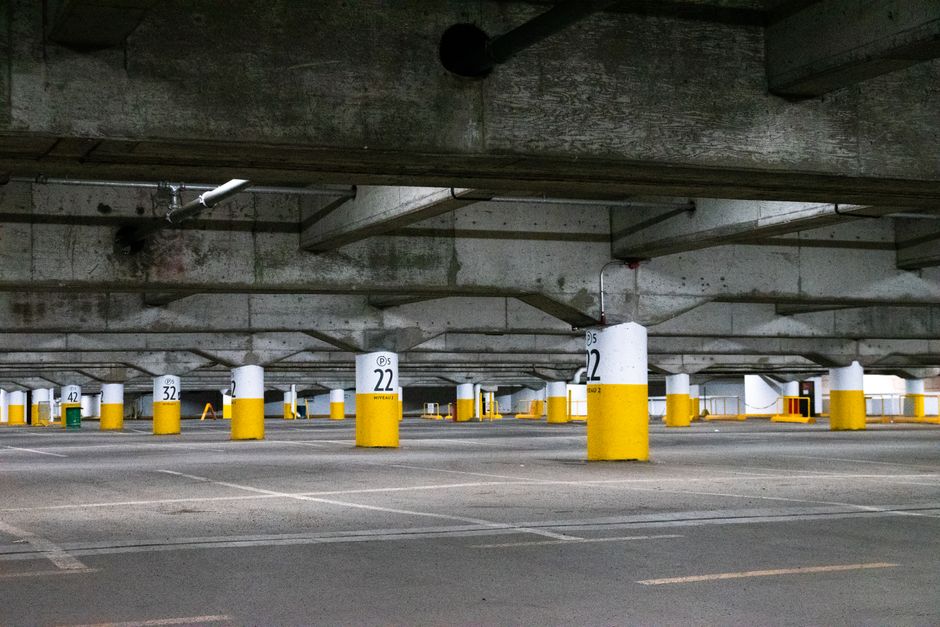
Empty underground parking lot with concrete pillars in Montreal, Canada.

How to Clean and Maintain an Epoxy Garage Floor in Riverside

2026-10-26

A soft broom once a week, a warm-water wash when the floor looks grimy, and a same-day wipe of any spill will keep an epoxy garage floor in Riverside looking good for years. Epoxy is not maintenance free, but the routine is short. The habits below are ordered the way most homeowners meet them: grit first, then washing, then spills, then the slow problems that come from heat, sun and the slab itself.

Start With Dry Grit, Not Water
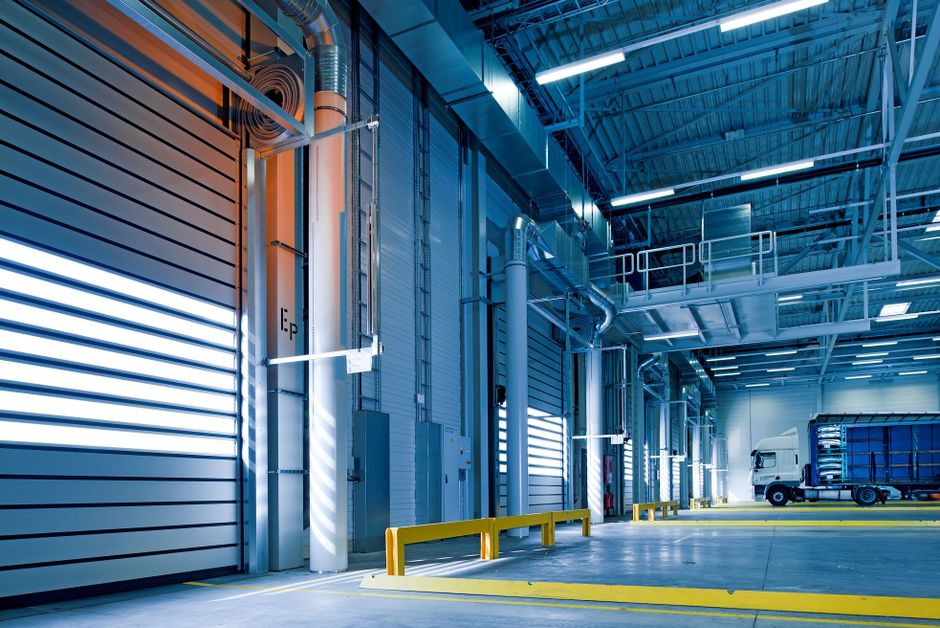
Spacious and modern warehouse interior with parked truck and steel structures.

Grit is the real enemy of a glossy floor. Sand and dirt under shoes and tires act like sandpaper, and fine scratches are what turn a shiny coating dull over time.

  • Use a soft push broom or a large microfiber dust mop at least once a week.
  • Sweep again soon after a Santa Ana wind event. Riverside's dry fall and winter winds push fine dust under garage doors and through gaps, and driving over that dust for days grinds it into the surface.
  • Put a walk-off mat inside the house entry door and the side door so less grit reaches the coating. Check the mat label first, because some rubber-backed mats can discolor a coating or trap moisture against it. A mat with a non-staining backing is the safer pick.

Wash the Floor the Right Way

Red SUV showcased in a stylish showroom with geometric lighting and marble walls.

For routine washing, a hard foam mop or a microfiber flat mop with warm water does the job. String mops tend to push dirty water around and leave streaks.

What to put in the bucket

A small amount of clear ammonia in a bucket of warm water is the cleaner many coating makers suggest. A dedicated cleaner made for resin floors also works well. If you have paperwork from the installer or the coating maker, follow that guidance first, since it applies to your exact product.

No household cleaner is safe for every epoxy coating, so test any new product in a small, out-of-the-way corner before using it across the floor.

What to keep out of the bucket
  • Dish soap, oil soaps and "mop and shine" products. These leave a film that looks hazy and turns slippery when wet. Each wash builds the film up further.
  • Wax-containing cleaners. Same problem, same haze.
  • Strong acidic cleaners, scouring powders and harsh citrus degreasers. Unless the label says it is safe for epoxy, these can dull the gloss and etch the topcoat.
Rinse and dry

Inland Southern California tap water tends to be hard, and in a warm garage it can leave white mineral spots as puddles evaporate. Rinse with clean water, then squeegee or towel dry instead of letting the water sit and dry on its own. This one extra step is what separates a floor that looks freshly cleaned from one that looks spotty.

Deal With Spills the Same Day

Oil, transmission fluid, antifreeze, brake fluid and battery acid can stain or soften a coating when left to sit. Brake fluid and battery acid deserve the fastest attention.

  1. Blot first. Soak up the liquid with paper towels or shop towels. Scrubbing a fresh spill only spreads it.
  2. Clean the spot with your mild solution and a soft cloth or brush.
  3. Rinse and dry the area.

For dried stains and tire marks, a soft nylon deck brush with your mild cleaner usually lifts them. Never reach for a wire brush, steel wool or a stiff abrasive pad, because those scratch the surface worse than the stain ever did.

If an older car or a mower drips, put a drip pan or an absorbent mat underneath. That protects the coating and also keeps the spot where you step out of the car from becoming dangerously slick.

Hot Tires in Riverside Summers

After a summer drive on a hot Inland Empire freeway, tires come home hot, and hot tires can lift or mark a coating. This is most likely with a thin, poorly bonded or kit-grade coating, though it can happen in any residential garage.

Look for peeling or cloudy patches in the tire paths. If you see them, the cause is usually adhesion or the product itself, not dirt, so more scrubbing will not help. If tire marks keep coming back, parking mats in the tire paths or a short cool-down before pulling in can help. If peeling has already started, have the coating evaluated.

Sun and Yellowing

Many standard epoxies yellow under UV light. It shows first near a garage door that stays open in strong sun, which is common on west-facing Riverside garages in the afternoon. Cleaning will not reverse it. A UV-stable topcoat is the usual fix, and many systems specify a polyaspartic or urethane top layer for exactly this reason. If yellowing bothers you, that is a conversation to have when the floor is due for a recoat.

Protect the Surface From Weight and Dragging

Concentrated weight and sliding metal cause most chips and gouges.

  • Put furniture pads or plywood under jack stands, motorcycle kickstands, heavy tool chests and storage racks.
  • Lift heavy items instead of dragging them across the floor.

A Word on Pressure Washers

On a cured, well-bonded coating, a low-pressure setting with a wide fan tip, held well back from the surface, is generally fine. A narrow tip held close can lift chipped edges and drive water under damaged areas. Epoxy should never be blasted at full power, and a floor with existing chips is better cleaned with a mop.

Inspect a Few Times a Year

Every few months, walk the floor slowly and look for chips, hairline cracks, peeling at the edges and soft spots. Pay the closest attention to the slab edges near the garage door, where heat and traffic are highest.

Repair chips early

Small chips let moisture, oil and dirt get under the coating, and peeling spreads from there. Patching a chip with a compatible resin is a small job. A flaking section left alone is not.

Bubbles and white haze

Bubbles or a white haze rising from below can signal moisture vapor coming up through the slab. Many Riverside homes are tract houses built slab-on-grade, and irrigation or drainage that keeps the soil wet along the garage edge can contribute. Check that sprinklers and downspouts send water away from the slab. If the symptoms continue after that, have the floor looked at before the coating lets go.

When the Floor Needs More Than Cleaning

Recoating

Recoat when the gloss has worn through in the traffic lanes but before the base layer shows. That usually means a scuff sand and a fresh topcoat rather than a full strip. How often depends on traffic, sun exposure and the original system, so there is no single schedule that fits every garage.

A slick floor

If the floor feels slippery when wet or dusty, first clear away any soap film or dust and test again. If it is still slick, a cleaner will not fix it. Epoxy is not naturally slip resistant when wet, and the real remedy is a recoat with an anti-slip aggregate broadcast into the topcoat.

A Simple Riverside Routine

  • Weekly: sweep or dust mop, and again after wind.
  • Monthly or as needed: wash with warm water and a mild, residue-free cleaner, then rinse and squeegee dry.
  • Same day: blot and clean any spill.
  • A few times a year: inspect edges, tire paths and the slab perimeter, and fix chips early.
  • When the gloss wears thin: scuff and recoat, ideally with a UV-stable topcoat.

Kept up this way, an epoxy floor stays easy to clean, and small problems get caught while they are still small.
Read more →

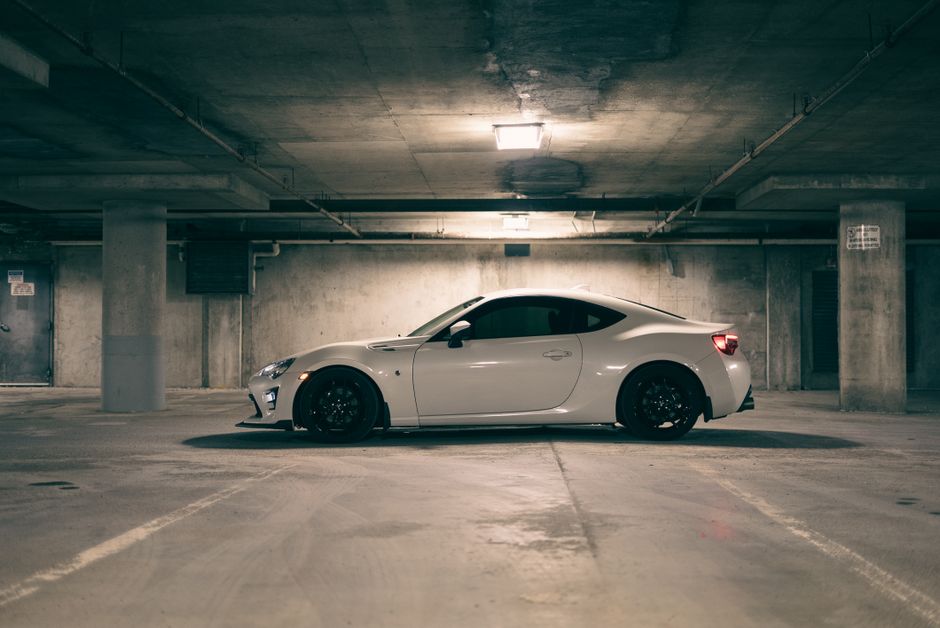
A sleek white sports car parked in a well-lit underground parking garage.

Epoxy Floor for a Home Gym or Workshop in Riverside

2026-10-26

Epoxy is a good choice for a Riverside workshop and a reasonable base for a home gym, as long as the gym section gets thick rubber mats where weights are dropped. The coating handles oil, tools and daily wear well. It does not handle impact, hot work or a damp slab without some planning, and Riverside's heat, sun and dust add a few details worth knowing before anything gets rolled onto the concrete.

Epoxy in a Home Gym: Base Layer, Not Impact Layer

Black and white close-up of a paint roller and tray during a home renovation.

A dropped dumbbell, kettlebell or loaded barbell can chip or crack an epoxy coating, and it can spall the concrete underneath. Epoxy is hard, but hard is not the same as impact-proof. Treat it as a clean, sealed, easy-to-wipe surface under the gym, not as the thing that absorbs the weight.

In the lifting zone, lay thick rubber stall mats or build a proper lifting platform on top of the epoxy. Cardio equipment, benches, cable machines and stretching areas can sit directly on the coating, which keeps most of the garage looking finished while protecting the part that takes abuse.

Slip resistance matters more than most people expect

Cured epoxy is slick when wet or sweaty, and a glossy finish is not naturally safe for workouts. Ask for a broadcast aggregate or an anti-slip additive in the topcoat, especially where you do cardio, jump work or anything with quick foot movement. A floor that looks great in a showroom photo can be treacherous with a sweaty shoe on it.

Plan for downtime

Application fumes can be strong. Ventilate the space and keep the door between the garage and the house closed. Plan for the gym to be unusable during cure. Light foot traffic is usually possible within a day or so, but gym equipment should wait for the full cure time on the product label, which is often several days.

Epoxy in a Workshop: Where It Shines

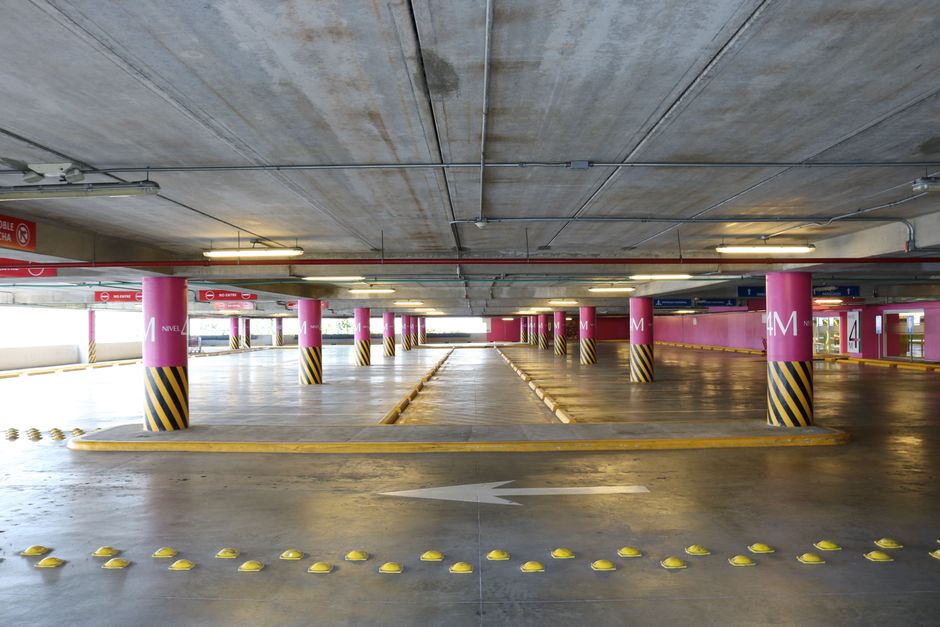
Empty indoor parking deck with pink pillars and clear directional signs in Santo Domingo.

A workshop is the better match for epoxy. Cured epoxy resists oil, gasoline, brake fluid and most shop chemicals, and it wipes clean in a way bare concrete never does. The catch is timing: spills should be wiped up promptly, because some strong solvents and paint strippers can soften or stain the coating if they sit.

Hot work and heavy points

Welding spatter, grinding sparks and dropped hot parts can scorch or pit epoxy. Put a welding blanket or a steel or fire-resistant mat under any hot work area.

Weight concentrated on small points is the other workshop hazard. Jack stands, engine stands and floor jacks can dent or crack the coating, especially in the first weeks. Slide plywood or steel plates under them. Rolling tool chests and vehicles should also wait for the full cure time before they go on the floor.

Hot tires

Hot tire pickup, where a freshly parked tire lifts the coating, is worse after summer freeway driving. Thin one-coat kits are the usual culprit. A properly prepped, full-thickness system resists it far better, which matters if the workshop is also where the car lives.

Preparation Decides Whether It Lasts

Most failed epoxy floors fail at the bond, not in the coating itself. The concrete should be mechanically ground or shot blasted to open the pores. Acid etching alone often leaves weak bond spots that peel later. A store-bought one-coat kit does not perform the same as a ground, multi-coat system, and the gap shows up fastest in a gym or shop.

Old paint, sealers and deep oil stains also have to go. Epoxy will not bond reliably to old coatings or oil-soaked concrete. A simple water drop test helps: if water beads on the slab instead of soaking in, something is sealing the surface.

Cracks and joints

Epoxy does not stop cracks from moving. Fill existing cracks first with a flexible or epoxy crack filler. Cracks that are still moving, which is common where expansive clay soils shift a slab, will often reflect back through the coating. Leave control joints visible or fill them with a flexible joint filler, because coating rigidly over a working joint usually produces a straight crack in the finish along that line.

Moisture: Riverside's Dry Air Is Not a Test

Dry inland air does not mean a dry slab. Moisture can still rise from the soil below, and epoxy does not waterproof the slab or fix a moisture problem coming from underneath. Before coating, do a simple check: tape a square of clear plastic sheet tightly to the concrete, leave it a day or two, and look for darkened concrete or droplets underneath.

Older garages, including detached ones behind homes in long-established areas like the Wood Streets, may sit on slabs poured without a vapor barrier. Those are more likely to need a moisture-mitigating primer before any epoxy goes down.

Also look outside. Sprinklers, planters or a lawn running right up to the garage wall can keep the slab edge damp, and moisture pushing up from below is a common cause of bubbles and lifting along walls. Redirect irrigation away from the slab before coating.

Riverside Weather and the Application Window

Heat

Summer heat shortens working time. Mixed epoxy can set in the bucket or on the floor before it levels. Installers often work early in the morning, keep material cool and mix smaller batches. A hot garage in July or August is a poor time for a rushed DIY job.

Cool slabs

Check the slab temperature, not just the air. The concrete should stay comfortably above the dew point during application and cure. On cooler winter mornings an unheated slab can be colder than you expect.

Wind and dust

Santa Ana winds carry dust and debris into an open garage. Keep the door closed during application and the first cure, or grit and leaves can end up embedded in the finish.

Sun

Standard epoxy yellows and chalks under UV, and not all epoxy is UV-stable. Inland sun striking a floor through an open west or south facing garage door will show over time. A UV-stable topcoat such as polyaspartic or aliphatic polyurethane over the epoxy holds color much better, and it is worth specifying if the door stays open while you train or work.

Keeping the Floor in Good Shape

Epoxy is low maintenance, not no maintenance. Sweep with a soft broom or dust mop and wash with a mild, pH-neutral cleaner. Grit tracked in from Riverside's dusty conditions acts like sandpaper under shoes and wheels and dulls the finish over time.

Inspect the floor once a year for wear paths, chips and lifting edges. Patch chips early, because moisture and grime get under the edge and let the damage spread. A worn but well-bonded floor can usually be lightly sanded and recoated with a fresh topcoat. Waiting until it peels in sheets usually means a full grind and redo.

Which Space Gets the Better Deal

For a workshop, epoxy is an easy yes when the slab is dry, the prep is thorough and hot work areas are protected. For a home gym, it is a yes with conditions: anti-slip texture in the topcoat, rubber mats or a platform under the weights, and a UV-stable finish if the door faces the afternoon sun. A garage that does both jobs can have both, with the shop side left exposed and the gym side matted.

Read more →